Senior Companionship
Connection Is Not Optional in Senior Care
By Aimee Chada · · Updated
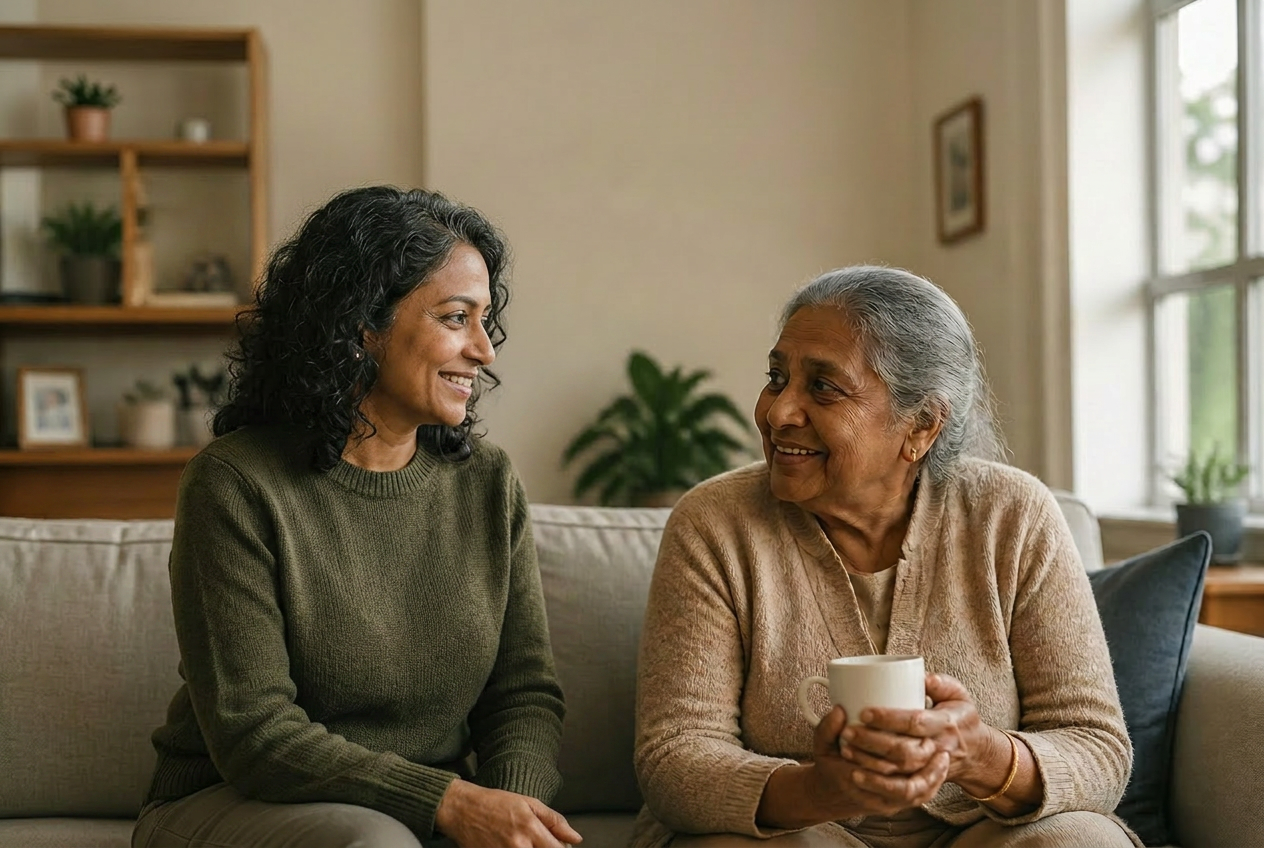
Being around people is not the same as being known.
It is one of the easiest things to miss in senior care. A dining room can be full. A hallway can be busy. Staff can be kind and attentive. And an older adult sitting in the middle of all of it can still go days without a conversation that feels like it was about them.
Proximity is not connection.
Care can be excellent and still leave a gap
This is not a criticism of families or care teams. Most are doing their best with limited time.
Care work is often measured in tasks that must be completed safely and on schedule. Families are managing appointments, medications, finances, their own jobs and their own children. Everyone is working hard, and the practical needs genuinely have to come first.
But the practical needs tend to fill the available time. What gets squeezed out is the unhurried part — the second question, the story that takes twenty minutes, the walk with no destination.
A senior can be safe, fed, dressed and supported, and still spend most of the week without feeling known.
What being known actually looks like
Being known is specific. It shows up in small details:
- Someone remembers the name of the town they grew up in
- Someone asks how the appointment went, unprompted
- Someone knows they take their coffee strong and their conversation slow
- Someone laughs at the same joke they have told four times, because the telling is the point
- Someone notices when they seem off, and asks
None of that is complicated. It just requires attention that is not divided.
Why families cannot always fill this themselves
Families often feel guilty about this, and they usually should not.
Adult children love their parents and still cannot be there three afternoons a week. Visits are frequently spent catching up on logistics: the pharmacy, the leaking tap, the next appointment. Those visits are valuable, but they are rarely leisurely.
There is also a difference in role. A daughter is a daughter. Some conversations — about worry, faith, regret, or simply the past — can be easier with someone who is warm, consistent and slightly outside the family story.
Connection is part of well-being, not a bonus
We tend to treat social connection as a nice extra, something to get to once the important things are handled. For older adults, that ranking is worth questioning.
Regular contact can shape whether someone gets dressed, goes outside, keeps up an interest, eats a proper lunch or has a reason to look forward to Thursday. It is not a promise about health outcomes. It is a simple observation: people often do more, and feel more like themselves, when someone is expecting them.
A reasonable expectation
Nobody needs a full social calendar. What many older adults need is far smaller — one or two dependable relationships where they are the focus.
Where companionship fits
A senior companion is one way to protect that time. Companionship is generally non-medical support built around the person: conversation, interests, outings, routine and presence. It works alongside family and care providers rather than replacing them.
The measure of good companionship is not how many hours were logged. It is whether an older adult ends the week feeling like someone knows them.
Interested in becoming a senior companion? Explore BeACompanion to learn more about building a professional companionship practice.
Related articles
- From Retirement to Purpose: Why Older Adults Are Helping Other Older Adults
"Senior" is not one life stage. Why some active older adults are finding purpose in companionship for people a generation further along.
- The Best Part-Time Job for Someone Who Loves Seniors May Not Feel Like a Job
Coffee, cards, a walk, a drive to the shop. Why companionship can be a flexible part-time fit for people who genuinely enjoy older adults.
- Can a Retired Person Become a Senior Companion?
Often yes — depending on the services offered, your own abilities and the requirements where you live. What the role involves in practice.