Senior Companionship
What Is Senior Companionship?
By Aimee Chada · · Updated
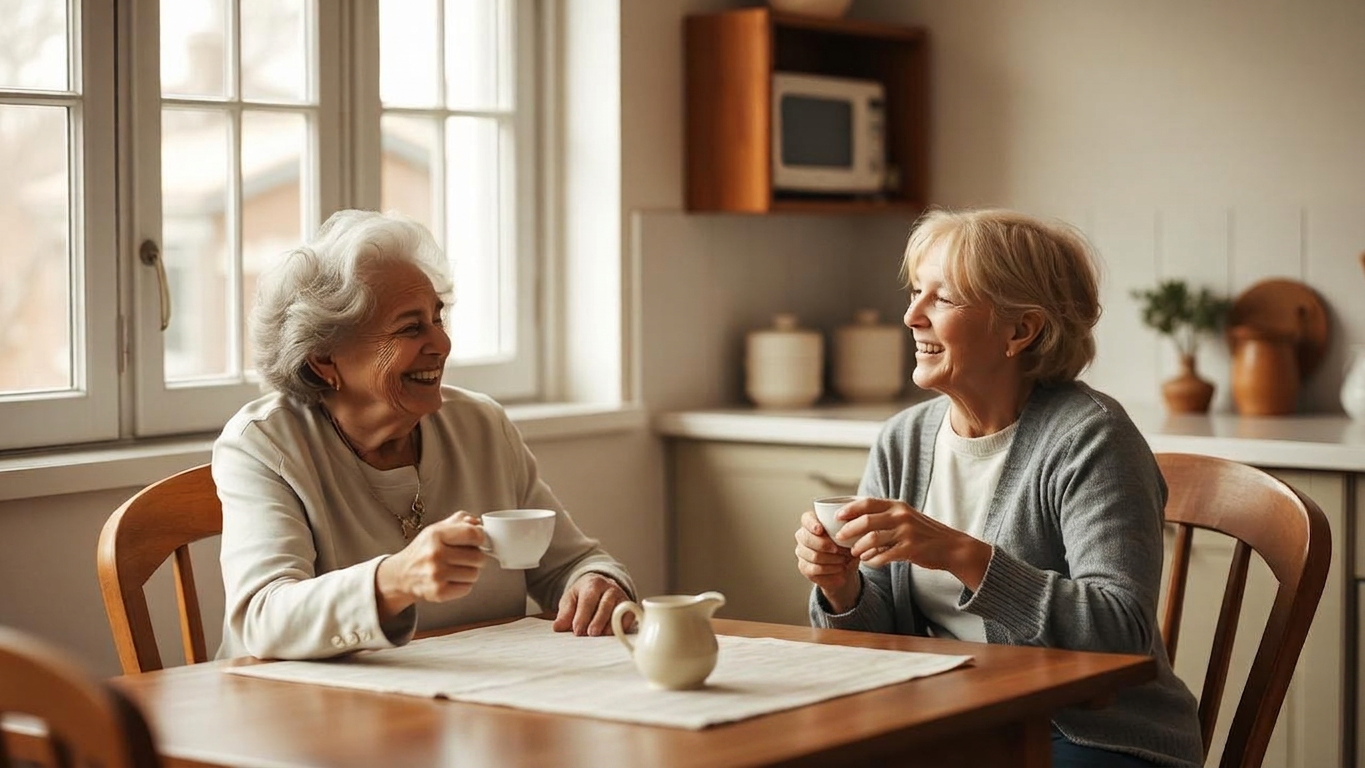
A senior can be safe, well cared for, and surrounded by help — and still feel that something is missing.
That is often where companionship comes in.
Senior companionship is generally non-medical, relationship-centred support. It is time spent with an older adult in a way that keeps them connected to conversation, interests, routine and everyday life. It is less about completing tasks and more about being someone who shows up, pays attention and knows the person.
What a senior companion may do
No two companion relationships look the same, because no two people are the same. Still, a typical week might include:
- Sharing tea or coffee and a real conversation
- Walking in a neighbourhood the person has known for decades
- Cards, puzzles, crosswords, music or an old film
- Running errands together instead of alone
- Driving to an appointment, a favourite shop or a church service
- Baking, gardening, letter writing, photo albums or reminiscing
- Simply being present on a quiet afternoon
The activity matters less than the attention behind it. A senior who feels genuinely known experiences their day differently than one who is only looked after.
Why connection matters
Older adults often lose social contact gradually rather than suddenly. Friends move or pass away. Driving becomes harder. Hearing or mobility changes make group settings tiring. Family love their parent deeply but live busy lives, sometimes in another city.
The result is that a person can be surrounded by capable, caring people and still have very few moments where someone sits down, asks a question, and waits for the whole answer.
Companionship is one way to protect those moments. It gives an older adult regular, dependable time with someone whose only job in that hour is to be with them.
How companionship differs from medical or personal care
Companionship is not medical care, and a companion is not a substitute for a nurse, personal support worker, therapist or physician. Companions generally do not provide clinical care, and the personal-care side of support — bathing, transfers, medication administration and similar tasks — sits with regulated or trained care roles, depending on the setting and local requirements.
That is not a limitation so much as a focus. When someone else is responsible for the clinical and personal-care needs, the companion is free to concentrate on the parts of life that are easy to lose: interests, conversation, outings, humour and routine.
Many families use both. Care keeps a person safe. Companionship helps their days feel like their own.
Built around a person, not a plan
Good companionship starts with listening — to the senior first, and then to the family. One person wants long walks and lively debate. Another wants quiet company, a familiar chair and the same hymns they have sung for sixty years.
From there it becomes personal:
- Preferences instead of defaults
- Routines that feel like home
- Conversations that pick up where the last one ended
- Faith, humour, opinions and history treated as worth knowing
Who it tends to help
Companionship can be a good fit for an older adult who is living alone, who has recently lost a spouse, who has stopped driving, who is adjusting to a move into retirement or long-term care, or whose family simply cannot be there as often as they would like.
A life that still belongs to them
Needing help does not make a person less of a person. Their personality, preferences, memories, faith, opinions and sense of purpose all still matter.
That is the heart of senior companionship: helping an older adult feel seen, known and engaged in a life that still belongs to them.
Interested in becoming a senior companion? Explore BeACompanion to learn more about building a professional companionship practice.
Related articles
- From Retirement to Purpose: Why Older Adults Are Helping Other Older Adults
"Senior" is not one life stage. Why some active older adults are finding purpose in companionship for people a generation further along.
- The Best Part-Time Job for Someone Who Loves Seniors May Not Feel Like a Job
Coffee, cards, a walk, a drive to the shop. Why companionship can be a flexible part-time fit for people who genuinely enjoy older adults.
- Can a Retired Person Become a Senior Companion?
Often yes — depending on the services offered, your own abilities and the requirements where you live. What the role involves in practice.